


2024 Keynotes

Keynote 1: Advancements in flash memory technologies to unleash the power of AI
Tuesday, August 6th @ 11:00 AM - 11:30 AM
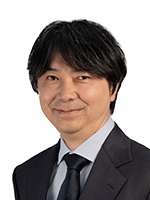 Mr. Atsushi Inoue is seasoned Vice President and Technology Executive in the Memory Division at KIOXIA Corporation. With over 30 years of experience in the flash memory industry, he plays a crucial role in product planning, technical marketing, and customer support for the latest 3D flash memory BiCS FLASH™. His responsibilities also include application engineering and development support for NAND components and applications. In his recent activities, one remarkable accomplishment is the launch of BiCS FLASH™ generation 8, which utilizes a groundbreaking technology of bonding the CMOS wafer and Cell Array wafer together, aiming for further capacity and density enhancement of flash memory. Mr. Inoue graduated from the Department of Materials Science and Engineering, Faculty of Science and Engineering, Waseda University in 1993. In the same year, he joined Toshiba, contributing to the evaluation of early-stage 4Mbit and 32Mbit NAND flash memory in the Memory Evaluation Engineering Department. In 1999, he moved to Toshiba America Electronic Components, where he supported the initial expansion of NAND technology. Upon returning to Japan in 2003, he worked in the Memory Evaluation Engineering Department, focusing on new technologies such as 70nm QLC and 56nm TLC. From 2009, he worked in the Memory Application Engineering Department, where he was involved in planning NAND products for the enterprise and data center markets. Subsequently, he served as Senior Director in the Memory Technical Marketing Managing Department before assuming his current position. Mr. Inoue is currently based at the KIOXIA Corporation headquarters in Tamachi, Tokyo, Japan.
 Mr. Ichhaporia holds the position of Senior Vice President and General Manager of the SSD Business Unit at KIOXIA America, Inc. In this role, he is responsible for the company’s marketing, business management, product planning, and engineering teams, overseeing the SSD product portfolio aimed at cloud, data-center, enterprise, and client computing market segments. Neville has over 20 years of extensive industry experience across a variety of responsibilities and disciplines, including product management, strategic marketing, new product development, hardware engineering, and R&D. Prior to joining KIOXIA in 2016, Neville held diverse roles in business, product management, and engineering development at Toshiba Memory America, SanDisk, Western Digital Corporation, and Microchip. Mr. Ichhaporia holds an MBA from the Santa Clara University Leavey School of Business, an MS in Electrical Engineering and VLSI Design from the University of Ohio, Toledo, and a BS in Instrumentation and Control Systems from the University of Mumbai. He is based at KIOXIA America’s headquarters in San Jose, CA.
With continued pursuit of innovation for more than 35 years, NAND flash memory has become an indispensable technology to capture data – the “new currency” of our digital world – fueling emerging paradigms in the world of AI, Cloud, and Edge Computing. Looking toward the future, KIOXIA’s BiCS FLASH™ 3D generations will continue to scale, enabling higher density and performance along with cost and power improvements. KIOXIA will lead the way and present cutting edge memory and SSD technologies, as well as highlight advanced developments to address the memory and storage needs for next-generation applications with innovations and optimizations rooted in flash-memory based technologies and approaches. No matter what your application, get there with KIOXIA.
Keynote 2: New 3D AI Chip Technology Accelerates Generative AI
Tuesday, August 6th @ 11:45 AM - 12:15 PM
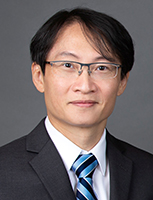 Andy Hsu is the Founder and CEO of NEO Semiconductor, a company focused on the development of innovative architectures for NAND flash and DRAM memory. Andy is responsible for the overall company strategy, execution, and technology innovation that fuels the company's growth. He has more than 25 years of experience in the semiconductor industry including positions as VP of Engineering and leader of R&D and Engineering Teams. This resulted in the development of more than 60 products in various non-volatile memories. Andy is an accomplished technology visionary and inventor of more than 120 granted U.S. patents. He performed research in the fields of Neural Networks and Artificial Intelligence (AI) while earning a master's degree in Electrical, Computer, and System Engineering (ECSE) from Rensselaer Polytechnic Institute (RPI) in New York. He earned a bachelor's degree from the National Cheng-Kung University in Taiwan.
The demand to accelerate artificial intelligence applications (AI apps) continues growing, especially for emerging workloads involving artificial neural networks like generative AI. Current AI Chips simulate neural networks for AI apps using a processor (GPU), memory (HBM), and software, but architectural inefficiencies waste significant amounts of performance and power. Next-generation AI Chips will use totally new AI Chip technology to perform neural network operations inside 3D DRAM, enabling 100x higher performance and 99% lower power consumption. New 3D architectures have the potential to enable the next wave of AI applications with more innovative memory and storage solutions.

Keynote 3: AI Memory & Storage Solution Leadership and Vision for AI Era
Tuesday, August 6th @ 01:00 PM - 01:30 PM
 Unoh Kwon is vice president of the HBM process integration group at SK hynix, leading the development and enablement of next generation HBM process technologies. Unoh Kwon has also served as fellow in various technology and product development roles in DRAM development group. Prior to joining SK hynix, he managed product integration group at GlobalFoundries and held logic technology process integration positions at IBM. Unoh Kwon holds Ph.D degree in materials science and engineering from Stanford University.
 Chunsung Kim, head of WW SSD PMO, is leading SK hynix world-wide SSD Program Management Office and also leading world-wide SSD SoC development efforts for both SK hynix and Solidigm. A 15-year veteran of S.LSI development, Chunsung started and built-up SK hynix in-house NAND Flash controller teams and capabilities. He also contributed in stabilizing SK hynix WW RnD operation & management and now is participating in managing Solidigm as part of management staff. With balanced knowledge and expertise of SSD engineering and business, he is playing a key role in oversea SSD RnD management and collaboration with Solidigm. Chunsung Kim earned his Master degree of Control and Instrumentation engineering from Chung Ang University in South Korea.
Generative AI, which is currently a hot topic, is evolving into GPT4, multilingual reasoning, and coding capabilities, and is expected to ultimately bring about transformations such as the "Industrial Revolution." SK hynix AI memory plays a pivotal role in AI chips, which is the core background of Generative AI, by providing differentiated values in the AI era. With the rise of Generative AI, customer pain-points are becoming more specific such as ① To maximize the learning/inferencing amount per hour; ② To minimize power consumption for learning/inferencing; ③ To minimize floor space and power utilization for storing data, which is increased for Gen AI use. As memory & storage plays a pivotal role in AI technology, SK hynix is committed to continuous innovation and technological breakthroughs to solve customer pain-points in AI memory & storage development and aims to contribute to the advancement of the ICT industry by providing world-best AI memory products and strengthening collaboration with global partners.

Keynote 4: The AI Revolution: Fueling New Demands for Memory and Storage
Tuesday, August 6th @ 01:30 PM - 02:00 PM
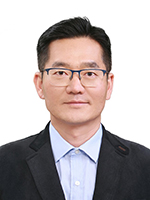 Taeksang serves as Corporate Vice President at Samsung Electronics, where he leads a team dedicated to advancing cutting-edge technologies, including CXL memory expanders, fabric-attached memory solutions, and processing near memory to meet the demands of next-generation data-centric AI architectures. With nearly two decades of expertise in memory and sub-system architecture, interconnect protocols, system-on-chip design, and collaboration with cloud service providers to enable heterogeneous computing infrastructures, Taeksang is a recognized leader in the field. Prior to joining Samsung, he held leading architect positions at Rambus Inc., SK Hynix, and Micron Technology, focusing on emerging memory controllers and systems. Taeksang earned his Ph.D. from KAIST in South Korea in 2006. Dr. Song has authored and co-authored over 20 technical papers and holds more than 50 U.S. patents.
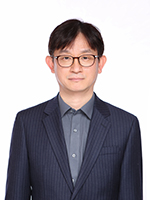 Hwaseok Oh leads the Solution Product Engineering team at Samsung, where he oversees the commercialization of flash storage products that include mobile memory devices like eMMC and UFS, as well as client-, server-, and enterprise-class SSDs. Hwaseok joined Samsung Electronics in 1997 as a SoC design engineer, focusing on the development of network and storage controllers. While working on flash storage products, he pioneered the world’s first UFS products. He also spearheaded the creation of high-performance NVMe SSD controllers for datacenters. More recently, he has been at the forefront of developing new flash storage technologies, contributing to innovations such as Samsung’s SmartSSD and Flash Memory-based CXL Memory Module. Hwaseok holds a Bachelor’s and a Master’s degree in Computer Science from Sogang University, earned in 1995 and 1997, respectively.
 Jim Elliott serves as Corporate Executive Vice President of Memory Sales at Samsung Semiconductor, Inc., responsible for a multi-billion-dollar revenue organization that spans Samsung’s entire memory portfolio in the Americas region. Jim is recognized as a market visionary, championing Samsung’s memory transition and market evolution to provide a synergistic product portfolio covering the server, data center, AI, PC, tablet, phone, wearable device, and automotive markets. He joined Samsung in 2001 and has held leadership positions in both marketing and sales departments. Jim holds a Bachelor of Arts degree from the University of California, Davis and received a Master’s degree in Business Administration from Cal Poly University in San Luis Obispo, CA.
As we enter a new phase of the AI revolution, significant technological advancements are reshaping the way we think about computation and data processing. The rapid growth in data generation and complex workload requirements has led to increased computational power, enabling the development of sophisticated, large-scale AI models. This shift necessitates advanced GPUs and enhanced memory and storage solutions for learning and inference. These solutions must provide substantial bandwidth, power-efficiency, and durability to maintain checkpoints and support proliferated multimodal AI models. Concurrently, there is a need to address sustainability challenges, such as increased power and cooling demands within data centers. In this keynote, we will explore cutting-edge memory products and technologies essential for various AI applications, highlighting how NAND solutions and CXL memory modules can be tailored to optimize performance across each application. We will discuss how these technologies meet and drive the demand for high-capacity storage in AI computing, aiming to improve Total Cost of Ownership (TCO) through enhanced power efficiency and effective space management. Some of the main technologies we will cover include cutting-edge DRAM technologies such as 256GB RDIMM/512GB MRDIMM and CXL 3.1 memory modules. We will also discuss high-bandwidth PCIe Gen6, enabling high-speed data access and reliability to enhance GPU efficiency.

Keynote 5: Navigating AI: Hyperscale Flash Standards and eSSD innovation
Tuesday, August 6th @ 02:00 PM - 02:30 PM
 Eric Spanneut is Vice President of Flash Global Product Management at Western Digital. In this role, he is responsible for the company’s enterprise SSDs, client SSDs, eMMC and UFS product portfolio. Prior to Western Digital, Eric had management roles at Honeywell, Micron and Samsung Electronics. Eric earned his Master EE from Telecom Paris Institute of Technology and MBA from INSEAD.
 Ross is a member of Meta’s Storage Hardware team. He has over 20 years of experience developing and bringing leading edge storage products to market. Ross works closely industry partners and standards organizations including NVM Express, SNIA/EDSFF, and Open Compute Project (OCP). With experience including ASIC design, he has an appreciation for the design challenges facing SSD providers to deliver performance and QoS within a shrinking power envelop. Ross holds over 40 patents.
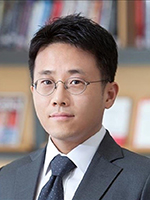 Jihyo Lee is the CEO and co-founder of FADU Technologies. He is a former partner at Bain & Company and a successful serial entrepreneur involved in multiple businesses in technology, telecom and energy. As CEO of FADU, he has established FADU as a fabless semiconductor innovator, uniting exceptional industry talent to create a revolution in data center and storage for next generation computing architectures.
Today Hyperscale’s wield significant influence over flash storage consumption, with a handful of vendors commanding much of the market. Amidst this dominance, the surge of AI applications stands as a pivotal force, reshaping infrastructure demands at an unprecedented pace. This keynote presentation delves into the intersection of hyperscale growth, AI expansion, and flash storage evolution. Exploring the symbiotic relationship between infrastructure advancements and flash storage requirements, we dissect the implications for standardization efforts, particularly through initiatives like the Open Compute Project (OCP). Moreover, we unravel the novel features essential for flash storage to meet the soaring demands of hyperscale environments, offering insights crucial for navigating the future of storage technology.

Keynote 6: Quantum-Proofing AI: Next-Gen Security for Protecting the World’s Data
Tuesday, August 6th @ 02:30 PM - 03:00 PM
 Rob Reed is Senior Director of Product Development Engineering, Data Center Solutions Group for Microchip Technology. He is responsible for managing and designing storage silicon. Prior to this role, Rob was VP of Data Center SSD Engineering at Kioxia, responsible for the design and launch of Kioxia’s first Datacenter Gen4 PCIe / BICS4 SSD. Rob also worked at Intel as Product Development Manager for Solid State Drive products. Rob has expertise in engineering management, silicon architecture, product development, strategic planning and applications engineering. He holds 6 patents in the US on SSD storage. Rob holds a Batchelor's Honors Degree in Electronics and Communication engineering from the University of Huddersfield University.
 Kyle Gaede has been with Microchip Technology for nearly 25 years and is currently an Associate Director for the company’s segment group with a focus on data centers. Gaede holds a Bachelor of Science in Electrical Engineering from the University of Texas Austin.
In the rapidly evolving landscape of artificial intelligence (AI), data has become the new gold. The need to protect the data and the underlying infrastructure from a myriad of threats has never been more pressing. We will look at the challenges that organizations face, the complexities of security from the ground up and provide key strategies to mitigate risk in a post-quantum world. We will examine the unique vulnerabilities inherent in AI infrastructure, from data pipelines and machine learning models to the compute resources that power them. The discussion will highlight how these vulnerabilities can be exploited by adversaries to compromise the integrity, confidentiality and availability of AI systems. We will highlight real-world scenarios where security breaches have led to significant consequences, underscoring the importance of a proactive and comprehensive security strategy. We will introduce a multi-layered approach that encompasses the latest in cybersecurity best practices, tailored specifically for the nuances of AI systems. We’ll look at security for data at rest and in transit and protecting model integrity. We will also consider the implications of quantum computing and what is needed to address those challenges. Attendees will gain an understanding of the key issues and strategies to secure their AI infrastructure effectively and how Microchip is working across our portfolio and within the industry to create a complete security solution for protecting the world’s data.

Keynote 7: New Era of NAND
Tuesday, August 6th @ 03:00 PM - 03:30 PM
 Prior to joining Western Digital, Soderbery served as president of UpLift, Inc., a travel finance company. Soderbery previously served as senior vice president and general manager, enterprise products, and in other senior leadership roles at Cisco Systems. He also advanced through a series of leadership roles at Symantec Corporation, including senior vice president, storage, and availability management group. Soderbery also serves as a member of UpLift’s board of directors, an advisor to Rockwell Automation, Inc. and as managing member of Acclimate Ventures LLC, a consulting, advisory and investment firm.
With the new era of NAND being driven by new industry dynamics Western Digital Executive Vice President & General Manager, Flash Business, Robert Soderbery, will discuss how the focus has shifted towards optimizing supply and demand, ensuring products meet customer needs, and navigating a market that is increasingly complex and segmented. He will share important insights on the critical role of storage in the AI data center all the way to the edge. Finally, Robert will reveal next-generation products and technologies fueling growth across the entire data cycle.

Keynote 8: Data is at the Heart of AI: Micron Memory & Storage are Fueling AI Revolution
Wednesday, August 7th @ 11:00 AM - 11:30 AM
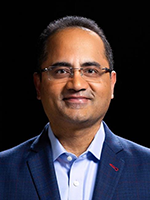 Raj Narasimhan is senior vice president and general manager of Micron's Compute and Networking Business Unit. Narasimhan is responsible for leading Micron’s largest business, driving advances in memory products focused on high-performance computing, artificial intelligence, and cloud and client computing.
In the rapidly evolving landscape of AI, data drives our insights, decisions, and innovations. This keynote will highlight the key role that Micron storage and memory play in this dynamic ecosystem, starting with the data center's role in enabling AI. As AI applications expand into every corner of our lives, they will rapidly exceed the confines of the data center to the edge - the car, the PC, the phone, and beyond – to deliver amazing real-time user experiences. Edge devices, equipped with advanced storage and memory capabilities, are playing a crucial role in bringing AI to the real world. We will explore how Micron’s leading technologies – such as HBM3E, high-capacity DDR5 DIMMs, high-performance NVMe™ SSDs, and high-capacity SSDs – are revolutionizing data center architectures, enabling faster, more power efficient ingestion, processing and analysis of vast data volumes. Join us as we look at Micron’s memory and storage innovation from cloud to edge and explore how AI is integrating seamlessly into our lives – enriching our future.

Keynote 9: Energy Efficiency and Data Efficiency in the Next Cloud-to-Edge AI Era
Wednesday, August 7th @ 11:40 AM - 12:10 PM
 Gary Adams is Associate Vice President of Enterprise Marketing at Silicon Motion. He leads a focused team in defining and promoting Enterprise controllers and development platforms that accelerate High Performance, Data Center SSD development. Gary has over 20 years in providing innovative leadership for storage products and business solutions addressing market application needs. He has held various marketing and sales management positions at Microchip, Microsemi, PMC-Sierra and IDT. Gary earned a BS and MS in Electrical Engineering from California State University, Chico.
 Robert Fan serves as Senior VP of Global Sales and is in charge of Silicon Motion's worldwide sales, sales operations, and FAEs. He also oversees corporate marketing communications and public relations. Mr. Fan has over 30 years of sales and marketing experience and joined Silicon Motion in May 2013 and served as the President of Silicon Motion USA until 2023. Prior to Silicon Motion, Mr. Fan served in executive management roles at Spansion, IDT, Staktek, and at two venture capital-backed startups. He also spent over nine years at Intel in sales, marketing and management positions and was a chip designer earlier in his career.
Artificial Intelligence is driving the implosion of data usage. Whether data is used for training or inference, it needs to be processed, secured, and stored. For both the Cloud and the Edge, AI will require high capacity, high performance, and low power characteristics of NAND storage as well as the cost-effectiveness of QLC NAND. In the coming years, new categories of AI servers, AI PCs, and AI smartphones will drive device growth. AI servers, AI PCs, and AI Smartphones will need the high performance of PCIe Gen 5 SSDs and UFS 4.0 solutions to optimize for AI storage performance. Silicon Motion, as a leading merchant supplier of SSD controllers and solutions, will discuss the current and future SSD controller innovations to address the evolving and unique requirements in cloud storage and edge devices and introduce how our latest technology and comprehensive product portfolio drive AI innovations in flash storage.

Keynote 10: Unlocking AI's Potential: NAND Flash Technology Used to Mitigate Data Expansion
Wednesday, August 7th @ 01:10 PM - 01:40 PM
 Chris Ramseyer joined Phison in 2020 after a twenty-year career as a leading technology journalist at sites like Tom’s Hardware, TweakTown, HardOCP, and The Adrenaline Vault (Avault). He quickly rose to the role of Director of Technical Marketing and is responsible for bridging the gap between the highly technical R&D teams, corporate marketing, and the media. In 2023, Chris applied for his first patent for Link-State Thermal Throttling, a technology that increases a throttled SSDs performance by 20x.
 Sebastien Jean is the Chief Technology Officer at Phison Electronics, where he focuses on developing technology strategy and building alliances with other innovative companies. He also works closely with engineering teams to help integrate new concepts into products. With 24 years of experience and over 30 filed patents, he has established himself as a thought leader in the storage industry. Before joining Phison, he held senior technology positions at Micron, SanDisk, and Western Digital. At Phison, he helped devise an iterative technology roadmap that advances Security, AI, PCIe Gen 5, USB4, BGA NVMe, Client Gaming Drives and Enterprise High-density E1.S. He earned a BS in Computer Science at the University of Ottawa (Canada).
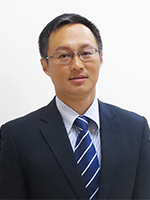 As the original founder and CEO of Phison Electronics, Mr. Pua led the company to its first success in 2000, with the design and manufacture of the world’s first single-chip USB flash controller storage device named the “Pen Drive.” Originally from Malaysia, Mr. Pua moved to Taiwan to attend the National Chiao Tung University where he earned a Master’s Degree in Electrical, and Control Engineering. Under Mr. Pua’s executive leadership, Phison has become the largest independent NAND flash controller and storage solution provider in the world. Mr. Pua is a firm believer in giving back to the community that supported his entrepreneurship. He actively participates in Director roles at: the Schoolfellow Association of NCTU, Taiwan, the Pan Wen Yuan Foundation, and the Global Talentrepreneur Innovation and Collaboration Association.
Embark on an exclusive journey with K.S. Pua, Chairman and CEO of Phison Electronics Corp., as we unveil a new enterprise brand - Pascari. Phison enterprise emerges as a beacon of innovation within the industry, pioneering revolutionary storage technologies tailored for seamless integration into the forefront of next-generation data centers. Engineered with an unwavering commitment to efficiency, Pascari sets the standard for rapid deployment, ensuring optimal performance and operational excellence. Join us for a glimpse into the future of storage solutions. This presentation will also explore Phison's innovative utilization of NAND flash technology to effectively mitigate the challenge of exponential data expansion in AI training, particularly in developing large-language models. By harnessing the power of NAND flash, Phison empowers applications to achieve unprecedented milestones, enabling them to deliver responses from generative AI models that rival human-like capabilities.
Keynote 11: High Performance Storage for AI
Wednesday, August 7th @ 01:50 PM - 02:20 PM
 Rob Davis is the Vice President of Storage Technology at the Nvidia Networking Platform Group where he focuses on ways to apply high-speed interface technology to AI storage solutions. As a technology leader and visionary for more than 35 years, he has been a key evaluator and decision maker for the development of storage networking products. He is currently leading the development and marketing of products based on NVMe over fabrics and RDMA which allow for very high-speed networking of storage for Data Centers and GPU base solutions. Davis had a similar role at Mellanox before the NVIDIA acquisition. Prior to that he was Vice President and Chief Technology Officer at QLogic, where for 15 years he drove development and marketing of Fibre Channel, Ethernet and InfiniBand technology into new markets such as blade servers. Before QLogic, Davis spent 20 years at Ancor Communications, which QLogic acquired in 2000. At Ancor, Davis served as Vice President of Advanced Development, Director of Technical Marketing, and Director of Engineering. He drove development and marketing of their Fibre Channel products in the early 90s and their InfiniBand and Ethernet products in the late 90s. Davis’ in-depth expertise spans Virtualization, Ethernet, Fibre Channel, SCSI, iSCSI, InfiniBand, RoCE, SAS, PCIe, SATA, ESSD and GDS.
Learn how advancements in AI and the demand for adding GPUs to servers is driving changes in server architecture. These demands are driving larger physical size and power supply capacity in AI focused server architectures. One way to resolve these competing requirements is to disaggregate the storage into its own chassis. We demonstrate how this can be done without sacrificing any performance to the GPU infrastructure utilizing NVMe-oF technology.

Keynote 12: Software-Defined Memory is Here
Wednesday, August 7th @ 02:20 PM - 02:50 PM
 Ian is currently the CTO/Chief Strategist, Global Service Providers for Red Hat, the world’s leading provider of open-source technologies. Strategic and trusted advisor engaging and leading our global industry community of customers and partners, focused on building innovative cloud-native solutions that improve their business outcomes. Over his career, Ian was the chief communications design architect or deployment of many global operator and enterprise systems (e.g. Petronas Towers, DISA, Bank of Canada, CSIS, MCI, SBC, and the global Canadian embassy system in 100+ countries around the world). Ian has been recognized in the telecom industry as a diamond member of the IBM Academy, IEEE CommSoc, and is a licensed Professional Engineer in Ontario, with a B.A.Sc (Honours) in Electrical Engineering from University of Waterloo. Ian grew up in Owen Sound, just a few hours north of Toronto, in Canada, and now resides in the beautiful pacific northwest.
 Tom is the Chief Innovation Officer with responsibility for growing and championing SWIFT’s innovation capabilities. He joined in January 2020, and is charged with driving new growth opportunities across the company and in collaboration with the SWIFT Community and partners. Prior to joining SWIFT, he was the Chief Information Officer at CLS Group based in London where he was responsible for the technology function and for further developing the organization’s technology vision. He served on the Executive Management Committee at CLS. Prior to CLS, he was the Chief Information Officer for LCH. Clearnet, one of the world’s leading multinational clearing houses. Tom worked for more than twenty years in several investment banks including Bank of America / Merrill Lynch as Head of Rate and Currencies Technology and at Barclays Capital as Managing Director in Technology and Global Head of Equities, Prime Brokerage and Client Technology. Tom studied Computer Science and Finance from California State University, and earned an Executive MBA from TRIUM.
 John Overton is the CEO and founder of Kove IO, Inc., responsible for introducing the world's first Software-Defined Memory offering, Kove:SDM™. Once considered impossible, Kove:SDM™ delivers infinitely scalable memory, and unleashes new Artificial Intelligence and Machine Learning capabilities while also reducing power consumption by up to 50%. In the late 1990s and early 2000s, Dr. Overton co-invented and patented pioneering technology using distributed hash tables for locality management. This breakthrough technology created unlimited scaling, and enabled the advent of cloud storage, scale-out database sharding, among other markets. While at the Open Software Foundation in the late 1980s, Dr. Overton wrote software used by approximately two-thirds of the world's workstation market. Dr. Overton has more than 65 issued patents world-wide, has peer-reviewed publications across a number of academic disciplines, and holds post-graduate and doctoral degrees from Harvard and the University of Chicago.
Software-Defined Memory (SDM) addresses the next wave of memory solutions to address the challenges of the “memory wall”. It performs like local memory, scales linearly, and works on any hardware - right now. In this talk, Kove and Red Hat will show how Software-Defined Memory technology has arrived. Red Hat will illustrate technology and operational benefits based on empirical test results of Kove:SDM™ configured on Red Hat OpenShift application platform using StressNG, Intel P- States, and standard Supermicro server hardware. Our comprehensive test data shows power savings from 12-54%, near-local CPU performance, and superior performance from remote memory compared to local memory. We’ll show real world use cases in multiple industry sectors that demonstrate Kove’s pooled memory solution Kove:SDM™ working on existing infrastructure, with no code changes. We’ll close with a leading expert from Swift discussing how they are changing the game for preventing economic crime for their customers with Kove:SDM™, where the stakes couldn’t be higher.